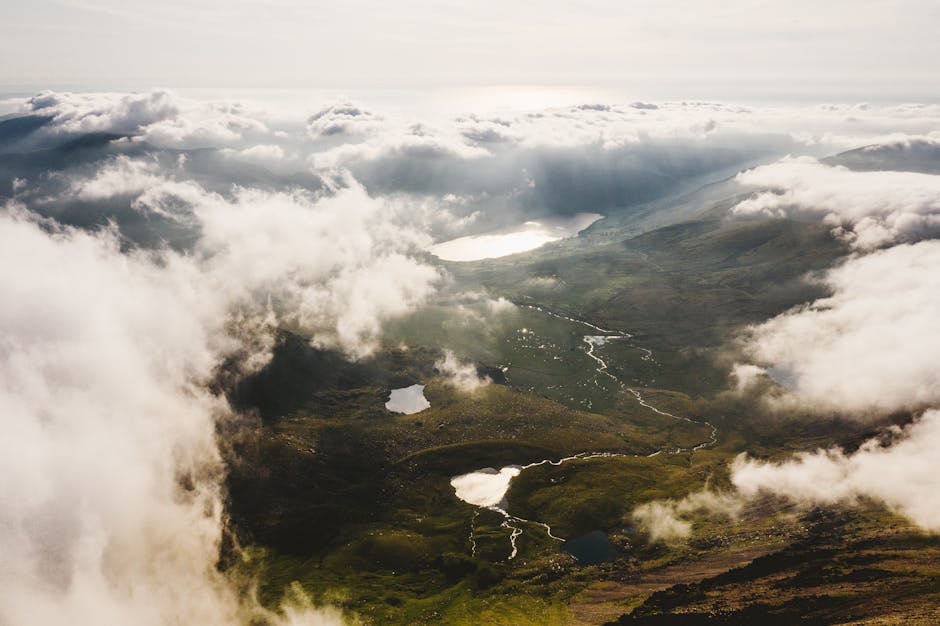
On any given map of our planet, the most prominent features are often the vast blue expanses of oceans and the winding lines that denote major rivers – the Amazon, the Nile, the Mississippi. These hydrological arteries are fundamental to human civilization and to the geography of continents, carving valleys and nourishing ecosystems. Yet, there exists an entirely different class of rivers, unseen and unmapped by traditional means, that dwarf the water transport capacity of their terrestrial counterparts. These are the atmospheric currents, powerful conduits of moisture high above us, silently shaping landscapes and driving weather patterns across the earth.
Imagine a river in the sky, not of liquid water, but of concentrated water vapor, stretching for thousands of kilometers, yet only a few hundred kilometers wide. These phenomena, known as atmospheric rivers, are precisely that: narrow corridors in the atmosphere responsible for moving immense quantities of water from the tropics towards the poles. Far from being a gentle cloud drift, these systems act like colossal aerial hoses, channeling moisture with astonishing efficiency and volume.
An atmospheric river’s influence can be profound. For context, a strong atmospheric river can transport an amount of water vapor equivalent to 7 to 15 times the average flow of the Mississippi River – every single second. This scale of transport is staggering, making these currents critical components of the global water cycle and powerful drivers of extreme weather events. When these atmospheric rivers make landfall, especially against mountainous terrain, they are forced upwards. This process, known as orographic lift, causes the water vapor to cool, condense, and precipitate as heavy rain or snow, often for days on end.
Such events are not isolated to one continent or climate. The impact of atmospheric rivers is felt globally. In the western United States, particularly California, atmospheric rivers are often referred to as the “Pineapple Express” when they originate near Hawaii. These events are crucial for replenishing snowpacks in the Sierra Nevada mountains, which act as natural reservoirs, slowly releasing water throughout the dry season to supply cities and agriculture. Without them, the region would face persistent, severe droughts, dramatically altering its landscape and habitability.
However, the immense volume of water they carry also means atmospheric rivers pose significant risks. While beneficial for drought relief, overly intense or prolonged landfalls can lead to widespread flooding, landslides, and significant infrastructure damage. Consider the deluges that have struck the United Kingdom and parts of Europe, or the torrential rains that can transform arid regions of Chile into temporary flowerbeds – these are often the fingerprints of powerful atmospheric rivers pushing moisture across the Atlantic or Pacific. Each country that lies in the path of these currents must contend with their dual nature: essential for water supply, yet potentially catastrophic in their extreme forms.
Scientists are increasingly studying atmospheric rivers, not just for their immediate weather impacts, but for their broader implications in a changing climate. Research suggests that as global temperatures rise, the atmosphere’s capacity to hold water vapor increases. This could mean future atmospheric rivers might carry even more moisture, leading to more intense precipitation events when they make landfall. Understanding their formation, trajectory, and interaction with landmasses is paramount for improving forecasting models and developing effective strategies for water management and disaster preparedness.
These hidden sky rivers underscore the interconnectedness of Earth’s systems. They remind us that the movement of water is not solely confined to the surface channels we readily observe, but also extends into the dynamic, invisible flows of our atmosphere. Their powerful role in delivering life-sustaining water, or conversely, destructive floods, highlights why these atmospheric currents are among the most impactful, yet least visually apparent, forces shaping our planet’s physical and human geography.